Nails
Russian Manicure Bristol: Precise Dry E-File Technique
From £39 · approx. 55 min
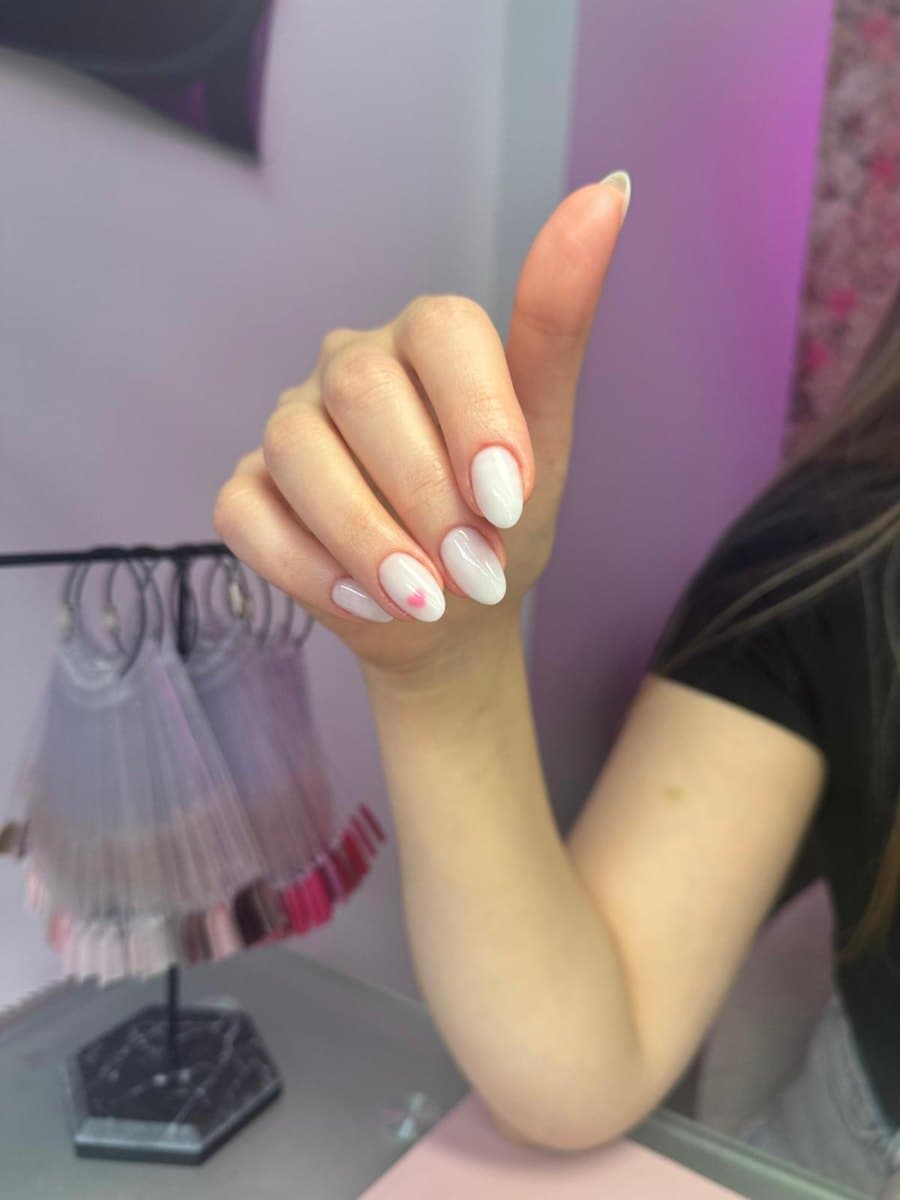
Russian manicure Bristol appointments use a dry e-file technique to refine the cuticle and pterygium. The £39 treatment takes 55 minutes with gel polish and is designed for a neat, clean-looking finish.
If you are searching for a russian manicure in Bristol, here is exactly what the technique involves, how it differs from a standard gel manicure, what it costs, and how to book at the Redland (BS6) studio.
What it actually does to the cuticle
The cuticle is the band of dead skin that grows from your finger up onto the nail base. The pterygium is a thinner layer that extends from the cuticle onto the nail plate itself: it can make nails look smaller because it covers the nail's base.
High-street manicures soften the cuticle with cream or water, push it back with a stick, and trim excess with nippers. The pterygium rarely gets removed because it's hard to see when wet, which is why high-street gel manicures look OK on day one and grown-out by day 10.
Russian manicure works differently:
-
Dry hands throughout. No soak before, no cream. The cuticle's natural dry shape is easier to read.
-
Electric file, fine-grit bit, low RPM. Small ceramic or diamond bit at fine grit (180–240 grit) runs 8,000–15,000 RPM. Fine grit removes dead tissue without touching live skin.
-
Pterygium lifted off the nail plate. This is what most high-street manicures skip. With the pterygium removed, the visible nail plate extends 1–2mm further back: the same nail, with more of it visible.
-
Side-wall cleanup. Dry back the skin at the nail's sides to expose full nail width.
-
Final trim with scissors, not nippers. Scissors leave a cleaner edge without the chunk-out nippers sometimes make.
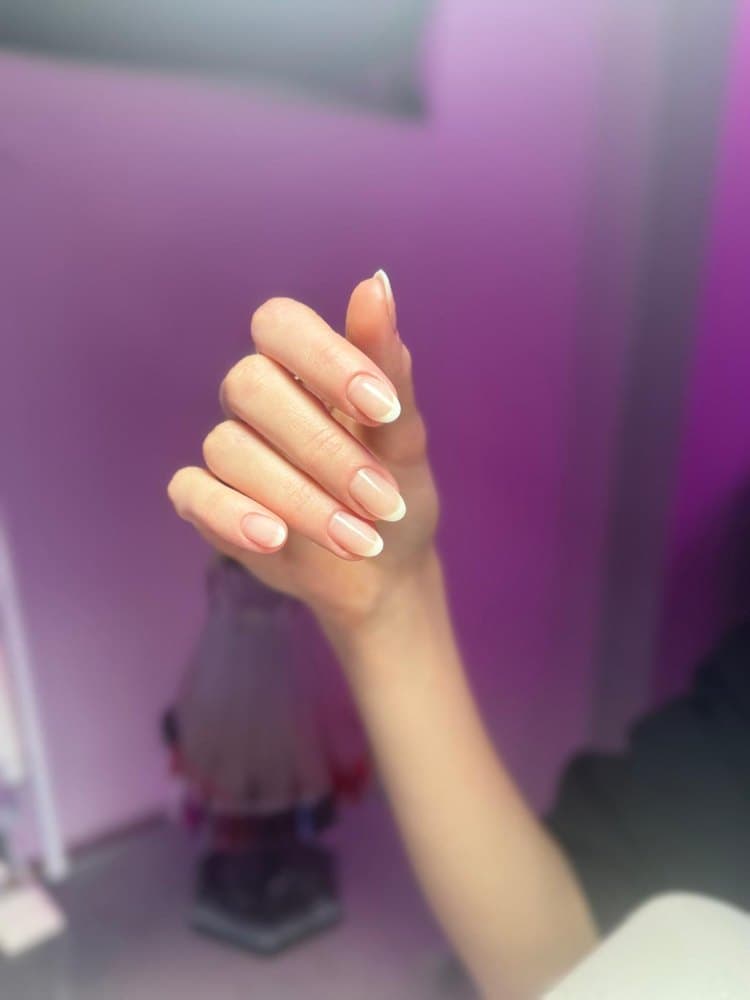
The result is a clean, precise cuticle line that photographs neatly and shows the nail shape clearly.
Why this matters
Two concrete changes after a Russian manicure:
Nails look longer. The pterygium removed means the visible nail plate extends further back. Same nail, just more visible.
Cuticle grow-out is slower-looking. Dead tissue takes longer to regrow than a pushed-back cuticle springs back. Visible grow-out lands at 2–3 weeks instead of 5–7 days.
For clients who book gel or BIAB on top, this is the difference between a manicure that looks fresh at week two and one that's already grown out.
Timeline
| Time | What happens |
|---|---|
| 0–3 min | Welcome, hand cleanse with alcohol |
| 3–8 min | Length and shape, file with regular file |
| 8–32 min | Dry e-file cuticle and pterygium work, about 12 min per hand |
| 32–40 min | Side-wall cleanup, final cuticle check, scissor trim if needed |
| 40–50 min | Gel polish: two layers plus base and top |
| 50–55 min | Cuticle oil, hand massage |
55 minutes with gel polish.
Russian manicure in context
Russian manicure is the prep technique for BIAB here. Every BIAB includes a full Russian dry manicure at no extra charge: BIAB at Nata Beauty is £51 including the Russian manicure.
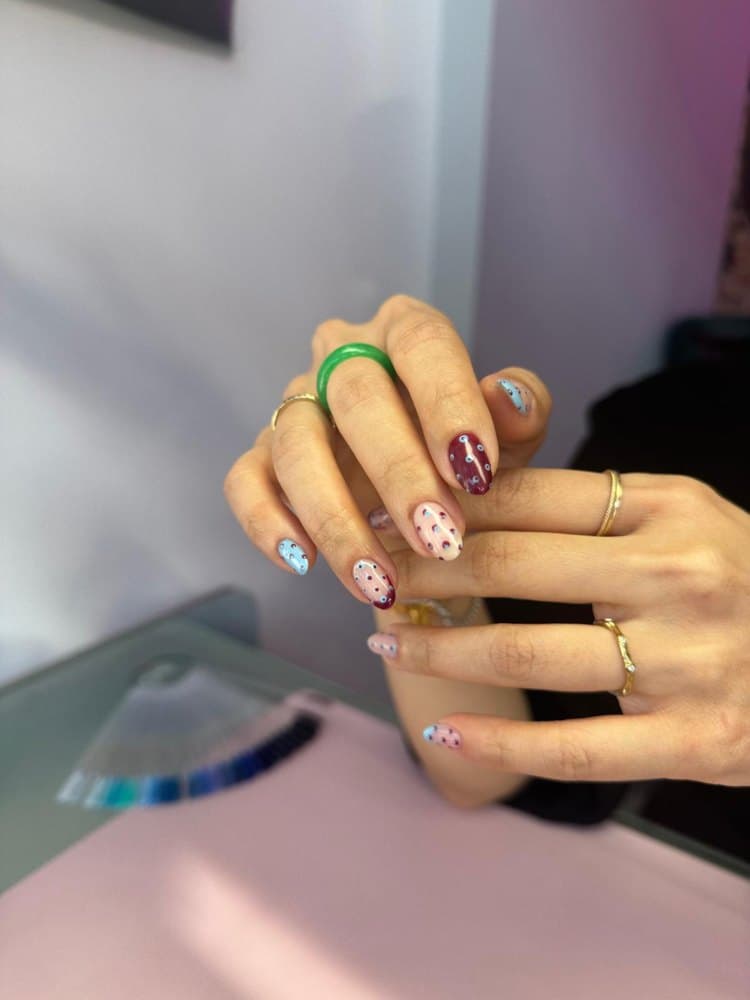
You can book Russian manicure standalone with gel polish (£39, 55 min). It's also the default prep for nail-art appointments because the exposed nail plate gives more canvas.
| Russian Manicure | Gel Manicure | BIAB | |
|---|---|---|---|
| Cuticle technique | Dry e-file, removes pterygium | Cream + push-back | Dry e-file (same) |
| Adds structure | No | No | Yes |
| Adds colour | Optional | Yes | Optional |
| Visible nail-plate extension | Yes: pterygium removed | No | Yes (included) |
| Duration (no polish) | 2–3 weeks | n/a | 3–4 weeks |
| Starting price | £39 | £33 | £51 (incl. Russian) |
Aftercare
- Use cuticle oil twice daily for the first week. Exposed skin under the pterygium is fresh and needs hydration.
- No picking or pushing at the cuticle line for 7 days.
- If you get gel on top, follow standard gel aftercare (rubber gloves for washing-up, no peeling).
- Rebook Russian manicure (or BIAB + Russian) at week 3–4.
Who books this
Russian manicure clients split into clear groups:
- Pre-event: weddings, parties and shoots, for clients who want impeccable hands in close-up photos
- Repeat gel/BIAB wearers: clients who've noticed other studios' work doesn't hold and want to understand why
- Aesthetic-focused clients: people who care about the cuticle line itself, not just polish colour
- Stubborn pterygium: tissue that won't stay back with cream-and-push prep
First manicure ever? Gel manicure is the gentler entry. Already had gel elsewhere and wonder why this studio's clients stick around? Book Russian manicure once and see.
Nata's training
Nata (Natalija Ivanišaka) trained in e-file manicure technique at Julia Rizhakova Nail Art Training Studio (2016) with instructors Julia Rizhakova and Tatjana Sergejeva, the same foundational training behind Russian-manicure work across Europe. She also completed Elena Shanskaya's manicure course (2015).
Book at Nata Beauty Bristol
10 Chandos Road, Redland, Bristol BS6 6PE: five minutes from Whiteladies Road, bus routes from Gloucester Road and Bishopston, walking distance from Clifton, Redland and Cotham.
Gallery
Frequently asked
It's the cuticle technique, not the country. Russian manicure refers to a method where the cuticle is removed using a small electric file (e-file) with fine-grit bits, on dry hands, with no water soak. The technique was popularised in Eastern European nail studios and is now the standard for high-end nail work across Europe. The 'dry' part is important: water-softened cuticles are difficult to work with cleanly because they swell and obscure the cuticle edge. Dry cuticles allow the e-file to lift the dead tissue precisely without affecting the live skin underneath.